Marketers often wonder which skills will secure jobs over the coming year. They do not need to guess these requirements. Hiring managers share this information openly through LinkedIn posts and podcast interviews. These leaders also define their needs clearly within job descriptions. Most candidates do not analyze these signals with enough care.
I came across a post recently that deserves your attention. An agency owner shared his frustration while filling an SEO role for his growth team. He explained that the message focused on a broader issue rather than technical search optimization. The owner noticed similar problems across every department like paid ads and customer success. He realized the main difference between candidates had almost nothing to do with their specific field.
If you read it carefully, it’s a hiring brief disguised as a complaint. Here’s what it’s actually telling you to build.
What The Post Says
The owner expressed a simple frustration regarding how candidates use AI reactively. They open a chat and paste a question to get a quick answer. These individuals use the result and move on immediately. They start the process from scratch when the same problem appears again. This approach ensures that nothing compounds over time.
The owner wanted to hire candidates who used AI systematically. These professionals built solutions once by plugging in the correct context. They never solved the same problem the same way twice. The system already absorbed the answer by the second time.
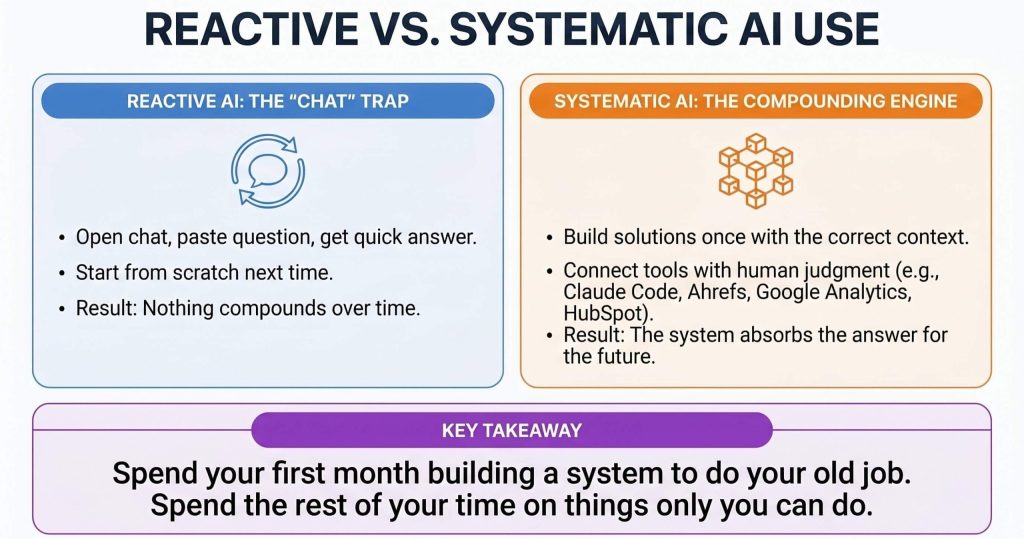
The owner highlighted a specific project his team had built recently. He described a Claude Code setup with months of accumulated context. This system connected directly into Ahrefs and Google Analytics and HubSpot. The setup surfaced strategic insights that were unthinkable a year ago. These results occurred because someone finally connected the tools with human judgment.
The owner shared a conclusion that should make every job seeker stop scrolling. He believes a new hire should spend their first month building a system. This system performs most of the tasks from their old job. The individual then dedicates their remaining time to things only they can do.
If you’re a candidate, that’s a job description. Read it again.
What He Actually Wants
You should decode the signal and the criteria are clear. He does not want someone who simply knows SEO. The manager seeks someone who thinks in systems and learns SEO along the way. His bet remains that a systems thinker learns the domain faster than a domain expert learns systems thinking. The systems hire produces more leverage than the specialist by the end of year one. This individual delegates most manual work to AI agents they built themselves.
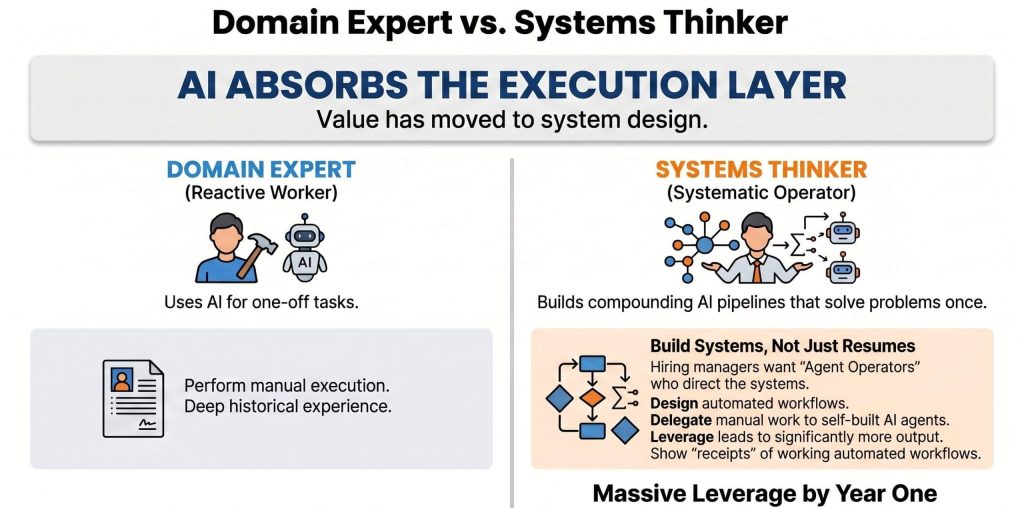
This perspective is not unique to him. It represents the dominant view among the sharpest hiring managers. The same logic applies to roles in paid ads and content and customer success. AI is absorbing the execution layer of every business function. Companies are hiring the layer above it instead. They want people who design and direct the systems that handle the execution.
Candidates face this specific test when applying for any marketing role in 2026. The professionals ahead of you in the stack do not necessarily possess more experience. They simply figured out the best information to show.
How To Prepare
You have access to good news because nobody has more than a year of experience doing this well. The learning curve remains steep but short for everyone. Candidates win these roles because they started building systems six months earlier. These individuals succeed more often than those with deeper resumes. The market values current initiative over historical experience right now.
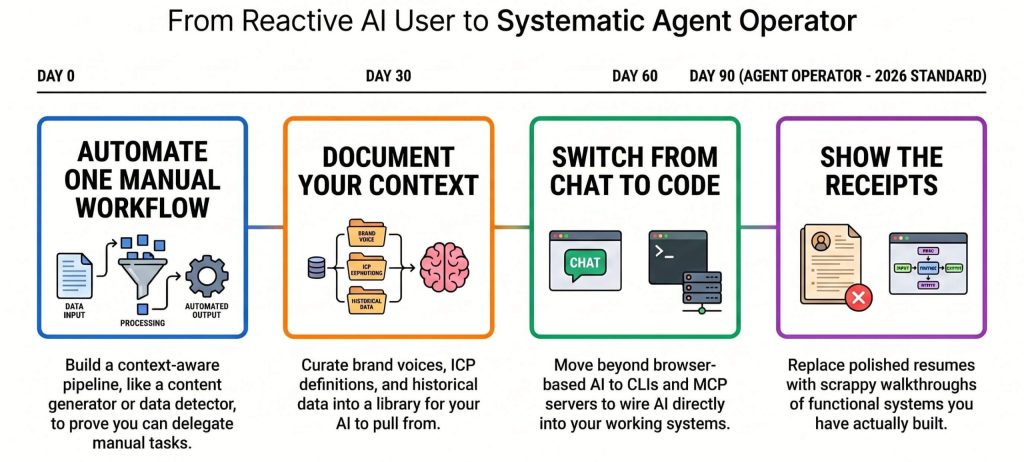
I would build a specific project over the next 60 to 90 days. This plan would land me at the top of these competitive stacks.
1. Pick one workflow you currently do manually, and automate it with context.
This task remains valuable regardless of its size. You could build a competitive intelligence pipeline that pulls weekly SERP changes. A content brief generator might utilize the brand voice and ideal customer profile of your client. You could also develop a GA4 anomaly detector that distinguishes signals from noise. The specific workflow matters less than your ability to build one. You must be able to walk an interviewer through the process clearly.
2. Document your context.
The skill that separates reactive users from systematic users is not prompting. Developers have already solved prompting. This specific skill focuses on curating context instead. You should write a brand voice guide and definitions for your ideal customer profile. These documents include top competitors and historical performance data for your AI workflows. You must show interviewers the library rather than just the output.
3. Switch from chat to code.
You must move beyond using AI in a standard browser tab. This step involves adopting Claude Code or similar tools that wire AI into actual systems. Successful candidates discuss MCP servers and agent setups and CLI workflows. These individuals focus on these tools because the technology requires a systems mindset. The hiring process specifically filters for this way of thinking.
4. Show the receipts.
Modern hiring managers feel allergic to polished case studies. These leaders feel impressed by working systems instead. A scrappy walkthrough of your custom system will beat a beautiful résumé. This tool performs part of your job for you almost every time.
The Bigger Pattern: The Agent Operator
A related idea circulates that deserves your attention. This concept explains why these skills matter far beyond your current role.
The argument follows a specific logic regarding the future of work. Professionals will not focus on one specific function as the hottest job for the next five years. The agent operator will become the most valuable role in the market. This person walks into departments like marketing and legal and finance to make agents work. He does not need an engineering degree to succeed. The operator must set up the correct systems and plug in relevant context. He then directs the results to achieve the right outputs.
The skill stack for this role looks something like:
- MCP servers represent the Model Context Protocol. They act as the connective tissue between agents and essential work tools.
- CLIs provide command line fluency. Most powerful AI workflows live in this environment rather than browser chats.
- Writing skills involve the technical file variety. This ability focuses on clear instructions in markdown files that agents follow reliably.
- Agents.md fluency follows an emerging documentation convention. This practice defines agent context and capabilities so systems remain maintainable.
- Business acumen provides the essential judgment layer. A professional knows which problems deserve solutions and which outputs deserve trust.
This is not a separate career path from the marketing roles mentioned above. It represents the same skill stack in a generalized form. An SEO professional who masters these techniques becomes qualified to operate agents in adjacent functions. A content lead builds her own agent stack and moves into legal or research operations if she chooses. These skills travel easily across different industries.
Job seekers must internalize this important concept immediately. The skills for a marketing role in 2026 also make you portable across different functions. These abilities remain valuable for the rest of the decade. There has rarely been a better time to invest in this specific stack.
Where To Start
You might read current job descriptions and feel the goalposts have moved recently. You are correct in this observation. These new goalposts remain visible and almost nobody has cleared them yet. You will have your pick of roles for years if you master these skills over the next 90 days.
You should pick one manual workflow this week. You must build the system that performs the task automatically. You ought to document the context thoroughly for this new setup. You should show the actual receipts to prove the results. This approach represents the new standard for your professional portfolio.
Xponent is hiring for exactly these types of professionals right now. You should visit our careers page to start a conversation if you have already begun building systems. This platform serves as the best place to showcase your progress.